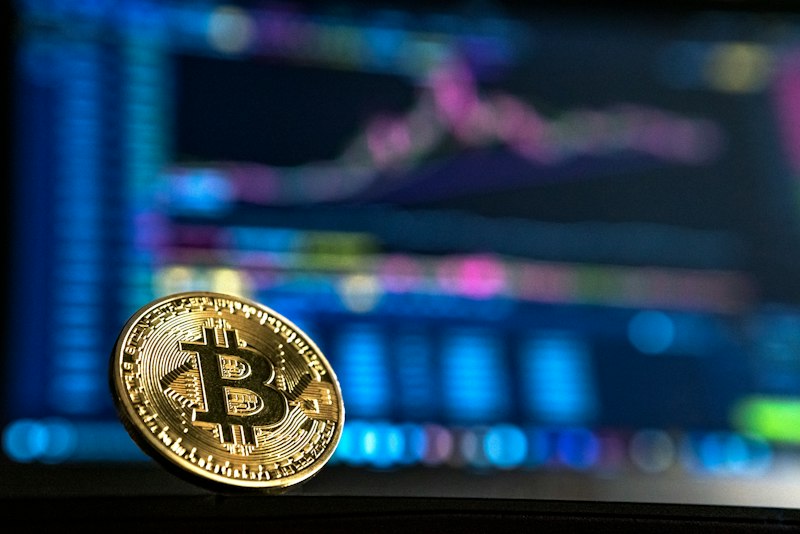
Bitcoin (BTC) continues to dominate financial headlines as the world's largest cryptocurrency navigates a pivotal year marked by institutional adoption, regulatory clarity, and macroeconomic uncertainty. After surging to an all-time high above $108,000 in December 2025, Bitcoin has traded in a wide range between $82,000 and $104,000 through the first half of 2026, leaving both bulls and bears searching for direction. With spot Bitcoin ETFs now holding over $120 billion in assets, the April 2024 halving cycle continuing to reduce new supply, and central banks around the world exploring digital currencies, understanding what's driving Bitcoin's price has never been more important for American investors. This complete market update breaks down the forces shaping Bitcoin's trajectory and what to watch for the rest of 2026.
Bitcoin Price in 2026: Year-to-Date Performance
Bitcoin entered 2026 riding the wave of post-halving momentum, opening the year near $97,000. January brought a rally to $104,500 as spot Bitcoin ETF inflows surged, with BlackRock's iShares Bitcoin Trust (IBIT) alone absorbing $4.2 billion in net new assets during the month. However, February saw a sharp correction to $82,300, triggered by a combination of factors: hawkish Federal Reserve commentary suggesting rates would remain elevated longer than expected, profit-taking after the post-halving run-up, and a temporary dip in institutional buying activity.
The spring brought recovery, with Bitcoin climbing back above $95,000 in April as the macroeconomic picture improved and ETF inflows reaccelerated. The summer months have been characterized by range-bound trading between $88,000 and $100,000, with Bitcoin currently trading around $94,200 as of mid-July 2026. Trading volume on major exchanges has averaged approximately $38 billion daily, down from the peak of $52 billion seen in December 2025 but still robust by historical standards. The total cryptocurrency market capitalization stands at approximately $3.4 trillion, with Bitcoin representing roughly 54% of that figure.
What's Driving Bitcoin Prices: The Five Key Factors
1. Spot Bitcoin ETF Flows: The approval of spot Bitcoin ETFs in January 2024 remains the single most transformative development for Bitcoin as an asset class. As of July 2026, the combined net assets of all spot Bitcoin ETFs exceed $120 billion. BlackRock's IBIT holds approximately $62 billion, making it one of the most successful ETF launches in history. Daily inflow and outflow data from these funds has become a key short-term price driver, with days of heavy inflows correlating strongly with upward price movement. Goldman Sachs research shows that Bitcoin now responds to ETF flow data with a 0.73 correlation coefficient, higher than its correlation with any other macroeconomic variable.
2. Post-Halving Supply Dynamics: The April 2024 halving reduced Bitcoin's block reward from 6.25 BTC to 3.125 BTC, cutting the annual new supply issuance rate to approximately 0.83%. Historically, Bitcoin has experienced its strongest price appreciation 12-18 months after each halving event. The 2020 halving was followed by a rally from $8,700 to $69,000 over the subsequent 18 months. If historical patterns hold, some analysts argue that Bitcoin could see significant upside in late 2026 and into 2027, though past performance is never a guarantee of future results.
3. Institutional and Corporate Adoption: MicroStrategy (now rebranded as "Strategy") continues to be the largest corporate holder of Bitcoin, with approximately 580,000 BTC on its balance sheet worth roughly $54.6 billion at current prices. Tesla maintains a Bitcoin position of approximately 9,720 BTC, while newer entrants like Semler Scientific and Metaplanet have adopted similar treasury strategies. JPMorgan Chase now offers Bitcoin custody services to institutional clients, and Fidelity reports that over 40% of its institutional clients have some allocation to Bitcoin.
4. Macroeconomic Environment: Bitcoin's relationship with macroeconomic conditions has evolved significantly. While early cryptocurrency advocates positioned Bitcoin as an uncorrelated asset, research from the Federal Reserve Bank of Cleveland shows that Bitcoin has become increasingly correlated with risk assets like technology stocks, with a 0.62 correlation to the Nasdaq-100 in 2026. This means that Federal Reserve interest rate decisions, inflation data, and GDP growth forecasts all impact Bitcoin prices meaningfully. The current expectation of 1-2 rate cuts in the second half of 2026 is generally viewed as supportive for Bitcoin.
5. Global Regulatory Landscape: The regulatory environment for Bitcoin has improved dramatically compared to previous years. The European Union's Markets in Crypto-Assets (MiCA) regulation is fully implemented, providing clear rules for exchanges and custodians operating in the EU. In the United States, the SEC has provided clearer guidance on digital asset classification, and the FIT21 (Financial Innovation and Technology for the 21st Century Act) passed with bipartisan support, establishing a clearer regulatory framework. El Salvador continues to use Bitcoin as legal tender, and several other developing nations have explored similar frameworks.
Bitcoin ETFs: How Wall Street Changed the Game
The launch of spot Bitcoin ETFs in January 2024 fundamentally altered how investors interact with Bitcoin. Before ETFs, gaining Bitcoin exposure required either holding the asset directly on an exchange, using custodial services, or investing in Bitcoin futures contracts. ETFs democratized access, allowing anyone with a brokerage account to buy Bitcoin exposure with the same ease as buying a stock.
The performance data tells the story: IBIT has attracted over $62 billion in net inflows since launch, while Fidelity's Wise Origin Bitcoin Fund (FBTC) has gathered approximately $28 billion. Grayscale's Bitcoin Trust (GBTC), which converted from a closed-end trust to an ETF, has experienced net outflows of approximately $18 billion as investors migrated to lower-fee alternatives, but the overall market has seen massive net inflows.
The fee competition among Bitcoin ETF providers has been fierce, with expense ratios ranging from 0.20% (IBIT) to 1.50% (some smaller issuers). This competition has benefited investors by driving down costs significantly. Morningstar analyst Jason Kephart notes that the average Bitcoin ETF expense ratio has fallen from an estimated 1.25% (pre-ETF alternative) to approximately 0.32%, saving investors hundreds of millions annually.
Looking ahead, the next frontier in crypto ETFs may be spot Ethereum ETFs (already approved), Solana ETFs (pending SEC review), and potentially basket crypto ETFs that hold multiple digital assets. Each new product brings additional legitimacy and capital flows to the broader cryptocurrency ecosystem.
Pros and Cons of Investing in Bitcoin in 2026
Pros:
- Scarcity and Supply Mechanics: Bitcoin's fixed supply cap of 21 million coins and the halving mechanism create predictable, declining new issuance. With approximately 19.7 million BTC already mined, over 93% of all Bitcoin that will ever exist is already in circulation.
- Institutional Infrastructure: The maturity of custodial solutions, regulated exchanges, and ETF products means that Bitcoin investing is now as safe and accessible as any traditional financial asset. Major custodians like Coinbase Custody and Fidelity Digital Assets hold over $200 billion in digital assets.
- Store of Value Narrative Strengthening: Bitcoin's performance during periods of geopolitical uncertainty and currency debasement has strengthened its "digital gold" narrative. BTC outperformed gold during the 2025 Middle East tensions, gaining 12% during the period gold rose 4%.
- Lightning Network Growth: Bitcoin's Layer 2 scaling solution, the Lightning Network, has seen significant adoption, with total capacity exceeding 5,400 BTC. This enables fast, low-cost Bitcoin transactions suitable for everyday payments.
- Global Adoption Accelerating: Over 420 million people worldwide now own Bitcoin, up from approximately 300 million in 2024. Adoption is accelerating fastest in emerging markets where Bitcoin serves as a hedge against local currency instability.
Cons:
- Extreme Volatility: Bitcoin remains significantly more volatile than traditional assets. Its 30-day annualized volatility has averaged approximately 55% in 2026, compared to roughly 15% for the S&P 500. Drawdowns of 20-30% are not uncommon even within bull markets.
- Regulatory Uncertainty Remains: While improving, the regulatory landscape varies dramatically by jurisdiction. U.S. tax treatment of Bitcoin (28% collectibles rate for long-term gains vs. 20% for stocks) is less favorable, and future regulatory changes remain unpredictable.
- Environmental Concerns: Bitcoin's proof-of-work mining consumes approximately 150 TWh annually, equivalent to the electricity consumption of a mid-sized country. While the industry is trending toward renewable energy (estimated 58% renewable in 2026), environmental criticism persists.
- No Intrinsic Cash Flows: Unlike stocks or bonds, Bitcoin generates no dividends, interest, or earnings. Its value is derived entirely from supply and demand dynamics and the belief that future demand will exceed future supply.
- Technical Complexity and Security Risks: Self-custody of Bitcoin requires technical knowledge, and loss of private keys means permanent loss of funds. Exchange failures (as seen with FTX in 2022) remain a risk for those who don't hold their own keys.
Why This Matters in 2026
Bitcoin's evolution from a niche internet experiment to a trillion-dollar asset class with ETF products endorsed by the world's largest financial institutions represents one of the most significant financial developments of the 21st century. In 2026, Bitcoin is no longer a fringe investment — it's a legitimate component of diversified portfolios, with major endowments, pension funds, and sovereign wealth funds holding positions.
For American investors specifically, Bitcoin's growing correlation with traditional markets means it can no longer be dismissed as irrelevant to mainstream financial planning. Whether you choose to invest in Bitcoin or not, understanding its price dynamics, the factors that drive it, and its role in the broader financial ecosystem is increasingly essential financial literacy. The decisions being made by regulators, institutional investors, and central banks about Bitcoin in 2026 will shape the financial landscape for decades to come.
FAQ: Bitcoin Price Today
Q: What is the current Bitcoin price and what's the forecast for end of 20206?
A: As of mid-July 2026, Bitcoin is trading around $94,200. Analyst forecasts for year-end 2026 range from $75,000 (bearish scenarios) to $150,000+ (bullish scenarios), with the median consensus around $110,000. Key variables include the pace of Federal Reserve rate cuts, ETF flow trends, and macroeconomic conditions.
Q: Is it too late to invest in Bitcoin in 2026?
A: With Bitcoin already having appreciated significantly from its 2022 lows around $15,500, some investors worry they've missed the opportunity. However, many institutional analysts argue that Bitcoin is still in the early stages of adoption. Standard Chartered has projected a $200,000 price target by 2028, citing continued institutional adoption and supply scarcity. As always, only invest what you can afford to lose, and consider dollar-cost averaging rather than making a large lump-sum purchase.
Q: How do I buy Bitcoin safely as an American investor?
A: The safest methods for U.S. investors include purchasing through regulated spot Bitcoin ETFs (like IBIT or FBTC) via a standard brokerage account, using regulated exchanges like Coinbase or Kraken with strong security practices, or holding Bitcoin in a self-custody hardware wallet (like Ledger or Trezor) for maximum control. Always enable two-factor authentication, use strong unique passwords, and be wary of phishing scams.
Q: Will Bitcoin replace the U.S. dollar?
A: Almost certainly not in any foreseeable timeframe. Bitcoin's volatility, limited transaction throughput, and deflationary monetary policy make it poorly suited as a day-to-day medium of exchange. However, Bitcoin may increasingly serve as a reserve asset and store of value alongside traditional currencies — a role it has already begun to fill for both institutional investors and individuals in countries with unstable currencies.
Stay informed with WalterHennery for the latest updates on cryptocurrency markets and financial trends that matter to Americans.